Growth States
Available FormEmersed / Submersed
Transition DifficultyMedium
Melt RiskModerate
Adaptation Time14 Days

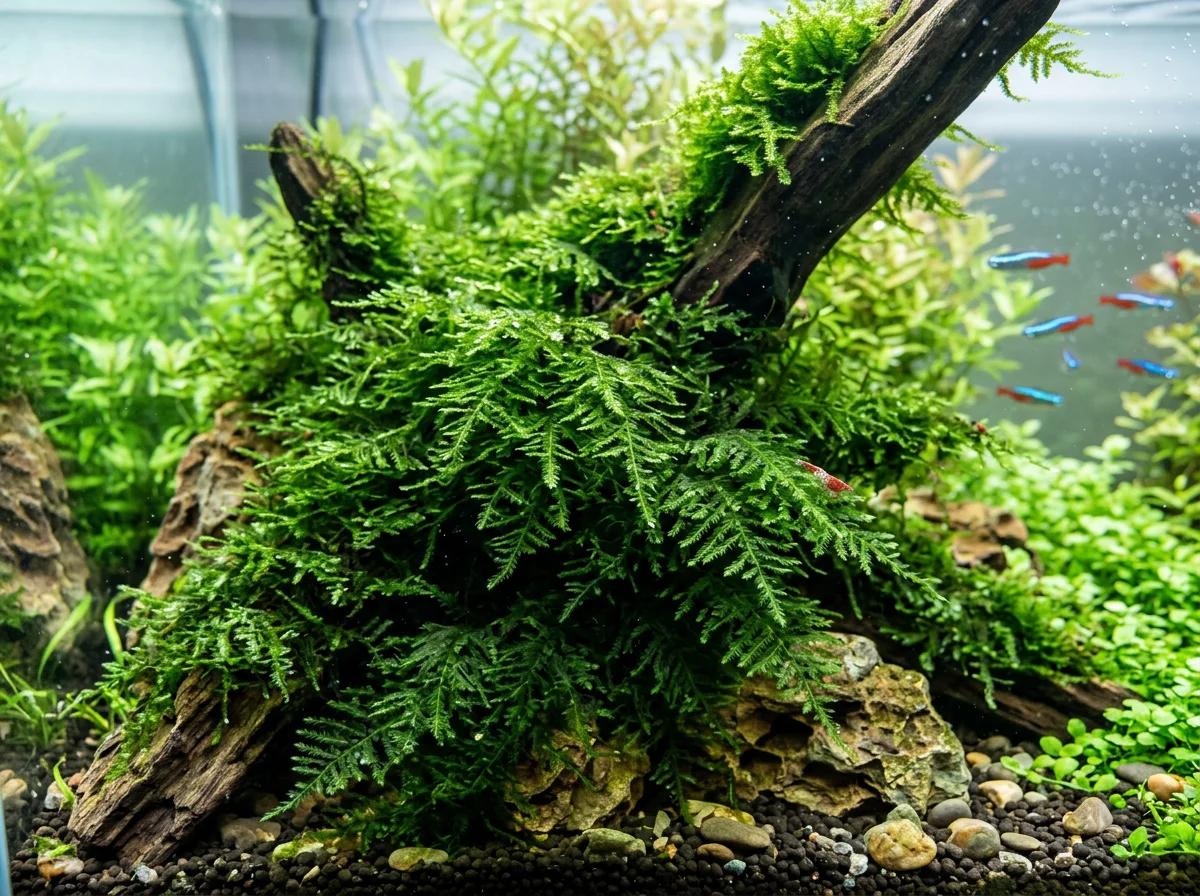
Overview: Christmas Moss is named for its triangular, drooping fronds that resemble the branches of a Christmas tree. It is a more structured and "tidy" looking moss than Java Moss. It is very easy to grow and can be attached to wood or rocks using thread or glue. It is an excellent choice for creating "moss trees" or for covering large pieces of driftwood to give them a lush, aged appearance.
Trimming
Biweekly: Trim tops and replant healthy stems as needed.
Propagation
Cuttings, runners, or division depending on species.
Christmas Moss may show different leaf size and texture between emersed and submersed growth.
Common Issues
Temperature
22–28°C
pH Range
6–7.5
Hardness (GH)
2–12 dGH
Leaf Shape
oval
Texture
medium
Growth Pattern
stem
Color Profile
Placement Depth
any
Grouping Size
4+
Algae Sensitivity
moderate
Nutrient Sensitivity
moderate
Density
moderate
Emersed Form
Emersed leaves of Christmas Moss are adapted to air growth and typically differ in thickness/shape.
Submersed Form
Submersed leaves of Christmas Moss are optimized for underwater flow and nutrient uptake.
Add Christmas Moss to your virtual scape and see how it fits.